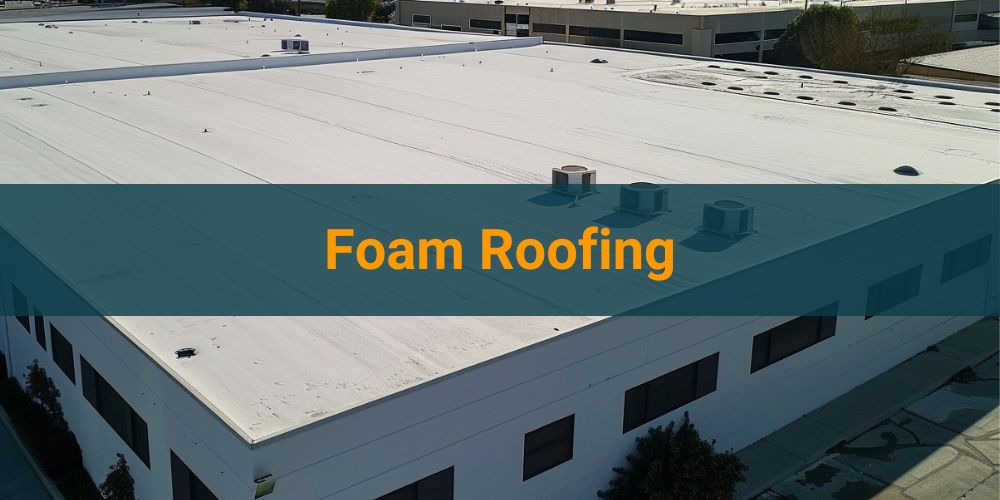
Commercial Roofing Rancho Cucamonga provides foam roofing services across Rancho Cucamonga, California, for flat and low-slope commercial roofs that require seamless waterproofing, insulation improvement, surface restoration, and controlled drainage performance. Foam roofing uses spray polyurethane foam to create a continuous insulated roofing layer over a prepared and compatible substrate. Once installed, the foam must be protected with a suitable roof coating system to resist UV exposure, weathering, surface wear, and long-term environmental stress. Foam roofing is a distinct commercial roofing system, not a standard roof coating, temporary patch, or cosmetic surface treatment. The spray polyurethane foam layer provides insulation, fills surface irregularities, reduces seams, and can help improve roof contour where drainage conditions allow. The protective coating layer shields the foam from sunlight, weather exposure, and surface degradation. Commercial Roofing Rancho Cucamonga evaluates both layers together because foam performance depends on substrate stability, foam adhesion, slope control, coating compatibility, and ongoing surface protection.
In Rancho Cucamonga, foam roofing suitability is strongly influenced by high UV exposure, daily thermal expansion and contraction, airborne dust accumulation, low-slope drainage sensitivity, rooftop equipment density, and large commercial roof spans. UV exposure makes protective coating integrity essential. Thermal movement increases stress at seams, penetrations, and transitions that foam can help reduce through continuous coverage. Dust accumulation and low-slope drainage issues make contour, water movement, and drainage maintenance critical before and after installation. Commercial Roofing Rancho Cucamonga installs or restores foam roofing only where the existing roof can support a stable foam system. The roof must be dry, structurally sound, properly prepared, compatible with foam adhesion, and free from uncontrolled moisture or severe substrate failure. Where trapped water, soft insulation, unstable decking, deteriorated layers, failed attachment, widespread saturation, or end-of-life roof conditions are present, repair, substrate correction, partial replacement, or full roof replacement must be evaluated before foam roofing is considered.
Foam roofing in Rancho Cucamonga is appropriate where a viable commercial roof requires seamless insulation, waterproofing continuity, and controlled surface shaping under local UV, thermal, dust, and drainage conditions.
- Seam-heavy flat and low-slope roof surfaces → existing seams, laps, joints, and surface irregularities create repeated water-entry risk → spray polyurethane foam forms a continuous monolithic layer over the prepared roof surface → seam dependency is reduced → waterproofing continuity is improved where the substrate remains viable.
- High heat exposure and thermal transfer → Rancho Cucamonga solar loading increases roof surface temperature and heat movement through the building envelope → foam roofing adds continuous insulation above the roof deck → thermal transfer is reduced → interior comfort and roof performance improve when the foam and coating system are correctly specified.
- Low-slope drainage sensitivity → shallow roof pitch, surface depressions, and restricted flow paths increase ponding risk → foam can be applied to improve contour and support water movement where roof conditions allow → standing water duration is reduced → ponding-related deterioration and recurring leak pressure are controlled.
- Complex rooftop penetrations and equipment zones → HVAC curbs, drains, vents, service lines, transitions, and irregular details create multiple leak-prone interfaces → foam can conform around prepared details and transitions when correctly reinforced and coated → vulnerable junctions receive continuous coverage → leak risk around complex roof geometry is reduced.
- Ageing but restorable commercial roof assemblies → the existing roof shows surface wear or performance decline but remains dry, stable, and structurally viable → foam roofing can restore insulation and surface continuity without full tear-off where appropriate → service life is extended → unnecessary replacement is avoided where the roof remains suitable for foam restoration.
Commercial Roofing Rancho Cucamonga delivers foam roofing as a controlled spray polyurethane foam roofing system with protective coating integration. By confirming roof dryness, substrate stability, adhesion compatibility, drainage behaviour, contour suitability, and coating protection requirements before installation, the foam system can deliver seamless waterproofing, improved insulation, and durable roof performance across Rancho Cucamonga commercial properties.
When Is Foam Roofing the Right Solution in Rancho Cucamonga?
Foam roofing is the right solution in Rancho Cucamonga when a flat or low-slope commercial roof remains structurally viable but requires seamless waterproofing, improved insulation, reduced seam dependency, surface restoration, or controlled drainage contouring. Foam roofing is not selected because a roof is simply old or leaking. It is selected when the existing roof can support spray polyurethane foam adhesion, when moisture is controlled, when the substrate remains stable, and when a foam-and-coating system can improve performance without full roof replacement. Commercial Roofing Rancho Cucamonga evaluates foam roofing suitability by assessing the existing roof assembly, moisture presence, deck and substrate stability, drainage behaviour, rooftop equipment layout, surface preparation requirements, adhesion compatibility, and protective coating needs. In Rancho Cucamonga, high UV exposure, daily thermal expansion and contraction, airborne dust accumulation, low-slope drainage sensitivity, and large commercial roof spans all affect whether foam roofing is appropriate. Foam can improve roof performance only where the base roof condition is suitable for a stable, protected spray polyurethane foam system.
Foam roofing is appropriate under the following commercial roof conditions:
- The roof is structurally viable but losing waterproofing continuity → seams, laps, joints, transitions, or surface irregularities are creating repeated vulnerability across the roof surface → spray polyurethane foam can form a continuous monolithic layer over the prepared substrate → seam dependency is reduced and waterproofing continuity is improved → full replacement may be avoided where the existing roof remains dry, stable, and restorable.
- The building needs improved insulation performance → heat transfer through the roof assembly is affecting interior comfort, energy performance, or thermal stability → foam roofing adds continuous insulation above the roof deck → thermal movement through the building envelope is reduced → the roof gains both waterproofing restoration and insulation improvement through one integrated system.
- Low-slope drainage requires controlled surface shaping → shallow roof pitch, minor depressions, or surface irregularities are contributing to slow drainage or localised ponding → foam can be applied to improve contour and direct water movement where substrate conditions allow → standing water duration is reduced → ponding-related stress on seams, flashings, and roof surfaces is controlled.
- Rooftop equipment and complex details create repeated leak risk → HVAC curbs, drains, vents, service penetrations, parapets, access areas, and transitions create multiple flashing interfaces → spray polyurethane foam can conform around prepared and reinforced details → the roof surface becomes more continuous around complex geometry → leak risk at equipment zones and irregular roof details is reduced.
- The roof is ageing but still suitable for restoration → surface wear, minor defects, or declining performance are present without widespread saturation, unstable substrate, or end-of-life assembly failure → foam roofing can restore surface continuity and insulation value when paired with a compatible protective coating → service life is extended → disruption, tear-off scope, and replacement cost may be reduced where foam restoration is appropriate.
Foam roofing is not appropriate under the following commercial roof conditions:
- Moisture has spread through the existing roof assembly → water is present in insulation, cover boards, substrate layers, or concealed roof components → applying foam would trap moisture beneath the new system → vapor pressure, hidden deterioration, adhesion failure, and future leaks can continue beneath the foam → wet materials must be removed or replacement must be evaluated before foam roofing is considered.
- The substrate cannot support foam adhesion → the roof surface is soft, unstable, contaminated, deteriorated, poorly attached, or incompatible with spray polyurethane foam → the foam cannot bond reliably to the base assembly → lifting, blistering, cracking, or delamination may occur → substrate correction, surface preparation, or replacement is required before foam installation can perform.
- Drainage failure is too severe for contour correction alone → ponding water, low points, blocked outlets, or slope deficiencies have caused saturation, substrate damage, or structural deterioration → foam shaping alone cannot correct deeper water-damage conditions → drainage redesign, substrate replacement, or full roof replacement may be required → foam should not be used to cover unresolved drainage failure.
- The roof has active system-wide failure → repeated leaks, widespread membrane breakdown, unstable attachment, severe cracking, multi-zone deterioration, or failed prior restorations show that the roof is no longer restorable → foam roofing would conceal failure rather than create a reliable new assembly → replacement becomes the correct intervention → long-term waterproofing performance cannot be restored through foam application alone.
- The protective coating layer cannot be maintained → foam roofing requires a compatible coating system to protect the spray polyurethane foam from UV exposure and weathering → if coating protection cannot be installed, inspected, or maintained, the foam layer becomes vulnerable to surface degradation → premature wear and system failure risk increase → another roofing solution may be more appropriate.
Commercial Roofing Rancho Cucamonga recommends foam roofing only where the existing roof can support a stable spray polyurethane foam system and protective coating layer. By separating suitable restoration conditions from wet, unstable, poorly drained, or end-of-life roof assemblies, Commercial Roofing Rancho Cucamonga ensures foam roofing is used as a durable commercial roofing solution rather than a surface cover over unresolved failure.
Need help with an upcoming commercial roofing project?
What Prevents Foam Roofing From Performing Correctly in Rancho Cucamonga?
Foam roofing fails to perform correctly when spray polyurethane foam is installed over moisture, unstable substrate conditions, poor surface preparation, unresolved drainage failure, or without a durable protective coating layer. Foam roofing depends on adhesion, substrate stability, dry assembly conditions, correct contouring, coating protection, and controlled detailing around penetrations and roof edges. If these conditions are not confirmed before installation, the foam system can blister, delaminate, crack, absorb damage through coating failure, or conceal deterioration beneath the new roof surface. In Rancho Cucamonga, foam roofing performance is especially dependent on UV protection, thermal movement control, dust-sensitive drainage, rooftop equipment detailing, and ongoing coating integrity. Spray polyurethane foam can create a seamless insulated roof surface, but the foam layer must be protected from sunlight and weathering by a compatible coating system. Commercial Roofing Rancho Cucamonga evaluates these performance risks before application so foam roofing is used only where the roof can support a stable, protected, and maintainable foam system.
The main conditions that prevent foam roofing from performing correctly include:
- Trapped moisture beneath the foam system → water remains inside insulation, cover boards, substrate layers, prior roof materials, or concealed roof areas before foam installation → spray polyurethane foam is applied over an active moisture condition instead of a dry assembly → vapor pressure, blistering, adhesion loss, concealed deterioration, and recurring leaks can develop beneath the foam → wet materials must be removed or corrected before foam roofing is considered.
- Unstable or deteriorated substrate → soft areas, loose attachment, deteriorated decking, unstable panels, failed membranes, or weakened roof layers remain beneath the foam → the foam bonds to a base that continues to move or break down → cracking, delamination, uneven surface movement, and premature system failure occur → substrate correction, partial replacement, or full replacement is required before foam can perform reliably.
- Dust contamination and poor surface preparation → airborne dust, debris, oxidation, loose granules, failed coatings, oils, sealant residue, or surface contamination remain on the roof before application → spray polyurethane foam cannot bond consistently to the prepared surface → adhesion becomes uneven across the roof assembly → lifting, separation, blistering, and early foam failure develop under Rancho Cucamonga heat and thermal cycling → cleaning, preparation, and adhesion verification are required before installation.
- Missing, thin, or failed protective coating → the spray polyurethane foam layer is not properly protected by a compatible roof coating system or the coating wears too thin over time → UV exposure reaches the foam surface directly → the foam begins to weather, degrade, chalk, erode, or lose surface integrity → waterproofing and insulation performance decline → coating installation, recoating, or surface restoration is required to protect the foam system.
- UV exposure without maintained coating protection → Rancho Cucamonga solar exposure continuously stresses the protective coating layer → cracks, wear, or thin coating areas expose the foam beneath → unprotected foam deteriorates faster than a protected system → surface erosion and leak vulnerability increase → periodic coating inspection and maintenance are required to preserve foam roof performance.
- Ponding water beyond the foam system’s drainage design → low points, blocked drains, restricted scuppers, dust accumulation, or poor slope create standing water on the foam roof surface → water pressure concentrates on coating seams, transitions, drains, and low areas → coating breakdown, surface softening, water intrusion, or premature deterioration may develop → drainage correction, contour improvement, or a different replacement pathway must be evaluated.
- Incorrect contouring or inadequate slope correction → foam is applied without properly addressing water movement across flat or low-slope roof areas → depressions, low spots, or poorly directed flow paths remain after installation → the roof continues to retain water in the same problem areas → ponding-related deterioration and recurring leaks remain active → foam thickness, slope design, drainage layout, and outlet conditions must be corrected as part of the system.
- Poor detailing around penetrations and rooftop equipment → HVAC curbs, drains, vents, skylights, service lines, parapets, and equipment transitions are not correctly prepared, foamed, reinforced, or coated → complex roof interfaces remain vulnerable even if the field area is covered → leaks develop around the same high-risk details → penetration detailing, flashing integration, reinforcement, and coating continuity must be controlled during installation.
- Thermal movement and building movement not accounted for → daily expansion and contraction across Rancho Cucamonga commercial roofs creates stress at edges, transitions, equipment zones, and changes in substrate → foam and coating details are not reinforced where movement concentrates → cracking, splitting, or separation develops at stress points → movement-prone areas must be reinforced and integrated into the foam-and-coating system.
- Applying foam over an end-of-life roof assembly → the existing roof has widespread saturation, unstable attachment, severe membrane failure, structural deterioration, repeated leak history, or multi-zone system breakdown → foam roofing would cover the failed condition rather than correct it → deterioration continues beneath the new surface and the foam system loses reliability → partial replacement or full commercial roof replacement becomes the correct long-term solution.
Commercial Roofing Rancho Cucamonga prevents foam roofing failure by confirming that the existing roof is dry, stable, clean, compatible, correctly contoured, properly detailed, and suitable for protective coating integration before installation. Where the roof can support spray polyurethane foam and maintained coating protection, foam roofing can improve waterproofing continuity, insulation performance, and drainage behaviour. Where moisture, unstable substrate, drainage failure, poor adhesion conditions, or end-of-life deterioration are present, repair, substrate correction, partial replacement, or full replacement must be addressed before foam roofing is used.
Need help with an upcoming commercial roofing project?
How Does Commercial Roofing Rancho Cucamonga Install Foam Roofing Systems?
Commercial Roofing Rancho Cucamonga installs foam roofing systems through a controlled process that verifies roof suitability, prepares the existing surface, applies spray polyurethane foam, shapes the roof surface where appropriate, protects the foam with a compatible coating system, and confirms completed performance before closeout. Foam roofing must be installed as an integrated system because the substrate, foam layer, drainage contour, rooftop details, and protective coating all determine long-term waterproofing and insulation performance. In Rancho Cucamonga, foam roofing installation must account for high UV exposure, daily thermal movement, airborne dust accumulation, low-slope drainage sensitivity, rooftop equipment density, and surface temperature conditions. These factors affect foam adhesion, foam expansion, curing behaviour, slope control, coating durability, and long-term system stability. Commercial Roofing Rancho Cucamonga controls each installation stage so the foam roof performs as a seamless insulated roofing system rather than a surface layer applied over unresolved roof failure.
The foam roofing installation process includes:
- Foam roofing suitability assessment → the existing roof is evaluated for system type, substrate stability, moisture presence, drainage behaviour, surface condition, attachment integrity, rooftop equipment layout, and remaining service life → foam roofing is confirmed only where the roof can support spray polyurethane foam and protective coating integration → unsuitable roofs are identified before installation → foam is not applied over saturated, unstable, or end-of-life assemblies.
- Moisture detection and wet-area control → insulation, cover boards, deck areas, prior repairs, seams, and concealed roof zones are checked for trapped moisture or lateral water movement → wet or compromised materials are removed, repaired, isolated, or excluded from the foam scope before installation → spray polyurethane foam is installed over a dry and viable assembly → blistering, adhesion failure, vapor pressure, and hidden deterioration beneath the foam are prevented.
- Surface cleaning and substrate preparation → airborne dust, debris, oxidation, loose materials, oils, failed coatings, sealant residue, and surface contamination are removed before foam application → the roof surface is prepared for adhesion and foam bonding → spray polyurethane foam can attach consistently to the substrate → lifting, delamination, uneven bonding, and premature system failure are reduced under Rancho Cucamonga heat and thermal cycling.
- Defect correction before foam application → open seams, loose flashings, damaged penetrations, soft substrate, loose panels, failed repairs, and unstable transitions are corrected before foam is installed → active failure points are resolved instead of buried beneath the foam system → the new foam roof is installed over a stable base → recurring leaks and concealed defect progression are avoided.
- Spray polyurethane foam application → foam is applied over the prepared substrate at the required thickness and coverage for the selected roof system → the material expands and forms a continuous insulated layer across the roof surface → seams, joints, minor irregularities, and transitions are reduced as separate water-entry points → waterproofing continuity and insulation performance are improved.
- Foam contouring and drainage shaping → low points, shallow-slope areas, flow paths, drains, scuppers, and ponding-prone zones are reviewed during installation → foam thickness and surface shaping are controlled where drainage improvement is part of the scope → water movement is directed more effectively across the roof surface → ponding pressure, drainage-related deterioration, and recurring leak stress are reduced.
- Penetration and rooftop equipment detailing → HVAC curbs, vents, drains, pipes, skylights, parapets, service lines, access areas, and roof transitions are foamed, reinforced, flashed, and prepared for coating protection → complex roof geometry is integrated into the foam system → high-risk leak points receive continuous detailing rather than isolated patching → water entry around equipment zones and transitions is reduced.
- Protective coating installation over foam → a compatible coating system is applied over the spray polyurethane foam after the foam surface is prepared → the coating protects the foam from UV exposure, weathering, surface wear, and environmental degradation → the foam layer remains shielded from direct Rancho Cucamonga solar exposure → premature foam erosion, coating breakdown, and surface deterioration are reduced.
- Coating thickness and coverage verification → coating coverage, film thickness, reinforced details, drainage zones, roof edges, penetrations, and high-exposure areas are checked during and after application → the protective coating layer is confirmed across the foam surface → thin or missed areas are corrected before closeout → the foam system begins service with consistent UV and weather protection.
- Curing, weather-window, and final performance checks → foam and coating work is managed around surface temperature, humidity, wind, rainfall risk, and cure timing → the system is allowed to stabilise before normal roof exposure and rooftop activity resume → completed foam, coating, drainage, penetrations, and edge details are inspected before closeout → early adhesion failure, wash-off, exposed foam, and post-installation leaks are reduced.
Commercial Roofing Rancho Cucamonga installs foam roofing systems as integrated spray polyurethane foam and protective coating assemblies. By confirming roof suitability, controlling moisture, preparing the substrate, correcting defects, shaping drainage where appropriate, detailing penetrations, applying protective coating, and verifying completed work, the foam roof is installed to improve waterproofing continuity, insulation value, and long-term roof performance across Rancho Cucamonga commercial properties.
Need help with an upcoming commercial roofing project?
Why Choose Commercial Roofing Rancho Cucamonga for Foam Roofing?
Commercial Roofing Rancho Cucamonga is chosen for foam roofing because spray polyurethane foam performance depends on correct roof suitability assessment, moisture control, substrate preparation, foam application control, drainage shaping, protective coating integration, and verified closeout. Foam roofing only performs reliably when the existing commercial roof can support foam adhesion, the substrate is stable, moisture is controlled, and the protective coating layer is correctly installed and maintained.
Commercial Roofing Rancho Cucamonga does not treat foam roofing as a simple coating or surface overlay. Each foam roofing project is evaluated as an integrated roofing system made up of the existing substrate, spray polyurethane foam layer, drainage contour, rooftop details, and protective coating system. In Rancho Cucamonga, high UV exposure, daily thermal movement, airborne dust, rooftop equipment density, and low-slope drainage sensitivity make this system-level control essential before foam is installed.
Commercial Roofing Rancho Cucamonga delivers foam roofing through controlled spray polyurethane foam system decisions:
- Foam roofing suitability is confirmed before installation → substrate stability, moisture presence, roof system type, drainage behaviour, surface condition, attachment integrity, rooftop equipment layout, and remaining service life are assessed together → foam roofing is recommended only where the roof can support spray polyurethane foam and protective coating integration → saturated, unstable, or end-of-life roofs are rejected before installation → foam is not used to conceal unresolved roof failure.
- Moisture conditions are controlled before foam is applied → insulation, cover boards, prior repairs, seams, deck areas, and concealed roof zones are checked for trapped water or lateral moisture movement → wet or compromised materials are removed, repaired, isolated, or excluded from the foam scope → spray polyurethane foam is installed only over a dry and viable assembly → vapor pressure, blistering, adhesion loss, and hidden deterioration beneath the foam are prevented.
- Substrate preparation is managed for foam adhesion → airborne dust, debris, oxidation, loose materials, failed coatings, oils, sealant residue, and surface contamination are removed before application → the roof surface is prepared for consistent foam bonding → spray polyurethane foam can adhere properly across field areas and details → lifting, delamination, uneven bonding, and premature system failure are reduced under Rancho Cucamonga heat and thermal cycling.
- Failed roof details are corrected before they are covered → open seams, loose flashings, damaged penetrations, unstable transitions, soft areas, failed repairs, and loose panels are corrected before foam installation → active failure points are not buried beneath the foam system → the new foam roof is built over a stable base → recurring leaks and concealed deterioration are avoided.
- Spray polyurethane foam application is controlled for thickness and continuity → foam is applied at the required thickness and coverage for the selected roof system → the material expands into a continuous insulated layer across prepared roof surfaces → seams, laps, minor irregularities, and transitions become less dependent on separate joint details → waterproofing continuity and insulation value are improved across the roof assembly.
- Drainage contour is addressed where foam shaping is part of the scope → low points, shallow-slope areas, drains, scuppers, flow paths, and ponding-prone zones are reviewed before and during installation → foam thickness and surface shaping are controlled where water movement can be improved → the roof surface is shaped to reduce avoidable water retention → ponding pressure, coating stress, and drainage-related deterioration are reduced.
- Rooftop equipment and penetrations are integrated into the foam system → HVAC curbs, vents, drains, pipes, skylights, parapets, service lines, access areas, and roof transitions are prepared, foamed, reinforced, flashed, and coated as part of the system → complex roof geometry is incorporated into the foam assembly → high-risk leak points receive continuous detailing → water entry around equipment zones and irregular roof details is reduced.
- Protective coating is treated as part of the foam roof, not an optional finish → a compatible coating system is applied over the spray polyurethane foam to protect it from UV exposure, weathering, surface wear, and environmental degradation → coating selection, coverage, thickness, and reinforced details are controlled → the foam layer remains shielded from direct Rancho Cucamonga solar exposure → premature foam erosion and surface breakdown are prevented.
- Installation conditions are controlled around weather and curing → foam and coating work is scheduled around surface temperature, humidity, wind, rainfall risk, and cure timing → the foam and coating layers are allowed to stabilise under suitable conditions → adhesion, expansion, coating film formation, and protective performance are preserved → wash-off, incomplete curing, exposed foam, and early system failure are reduced.
- Completed foam roofing work is verified before closeout → foam continuity, coating coverage, film thickness, drainage areas, penetrations, reinforced details, roof edges, transitions, and high-exposure areas are inspected after installation → thin coating areas, exposed foam, weak details, or missed sections are corrected before the roof is returned to service → the foam roof begins service as a verified insulated and protected roofing system → early leaks, coating failure, and premature roof deterioration are reduced.
Commercial Roofing Rancho Cucamonga is selected for foam roofing because the service is delivered as an integrated spray polyurethane foam and protective coating system, not as a basic overlay. By confirming roof suitability, controlling moisture, preparing the substrate, correcting defects, shaping drainage where appropriate, integrating rooftop details, protecting the foam with coating, and verifying completed work, Commercial Roofing Rancho Cucamonga helps Rancho Cucamonga commercial properties improve waterproofing continuity, insulation performance, and long-term roof reliability.
When Should a Rancho Cucamonga Property Request a Foam Roofing Assessment?
A Rancho Cucamonga commercial property should request a foam roofing assessment when a flat or low-slope roof is ageing, losing waterproofing continuity, showing recurring seam or penetration vulnerability, experiencing heat-transfer concerns, or developing drainage issues that may be suitable for spray polyurethane foam restoration. Foam roofing is most effective when the existing roof remains dry, stable, compatible, and structurally viable enough to support foam adhesion and protective coating integration. In Rancho Cucamonga, high UV exposure, daily thermal expansion and contraction, airborne dust accumulation, rooftop equipment density, and low-slope drainage sensitivity can accelerate roof deterioration while the system is still within a restorable condition range. Seam-heavy roof surfaces, minor ponding areas, surface irregularities, repeated leak-prone transitions, and aging roof assemblies may benefit from foam roofing if moisture has not spread through the assembly and the substrate can support a stable spray polyurethane foam system. Commercial Roofing Rancho Cucamonga evaluates foam roofing suitability by assessing roof system type, moisture presence, insulation condition, substrate stability, drainage behaviour, surface preparation requirements, rooftop equipment interfaces, foam adhesion compatibility, contour potential, protective coating requirements, and remaining service life. This assessment determines whether foam roofing is the correct pathway, whether repair or substrate correction is required before foam installation, or whether partial replacement or full commercial roof replacement is necessary because the existing roof has moved beyond foam viability. Requesting an assessment early helps prevent foam roofing from being considered too late, after moisture saturation, substrate instability, drainage failure, or end-of-life deterioration has made the roof unsuitable for spray polyurethane foam. When the roof is assessed while it remains dry, stable, and restorable, Commercial Roofing Rancho Cucamonga can determine whether foam roofing can improve waterproofing continuity, insulation performance, drainage contour, and long-term roof protection without unnecessary full tear-off. If your Rancho Cucamonga commercial property has an ageing flat roof, recurring seam or penetration issues, minor ponding concerns, heat-transfer problems, complex rooftop equipment areas, surface irregularities, or uncertainty around whether the roof requires repair, foam roofing, coating restoration, partial replacement, or full replacement, request a foam roofing assessment from Commercial Roofing Rancho Cucamonga to define the correct next step based on roof condition, substrate stability, moisture risk, drainage behaviour, and foam system suitability.