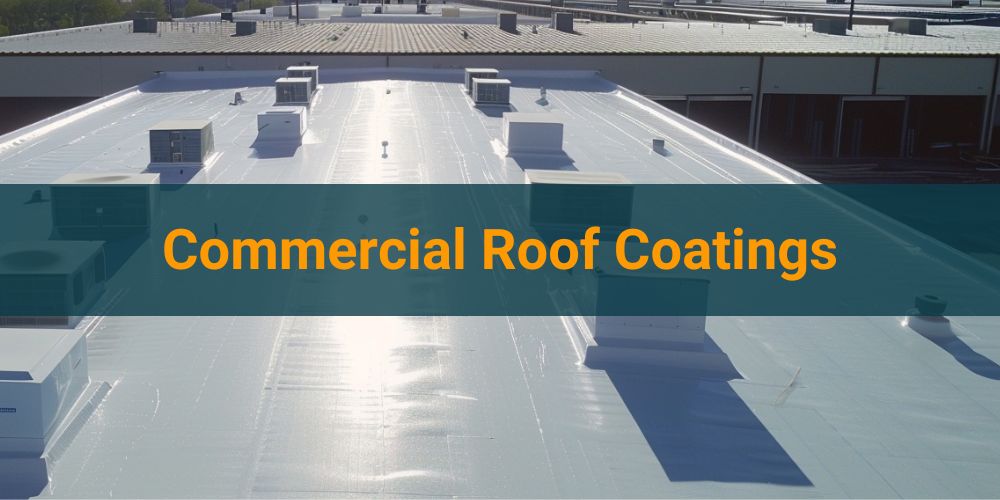
Commercial Roofing Rancho Cucamonga provides commercial roof coating systems across Rancho Cucamonga, California, delivering repair, restoration, and protective solutions for flat and low-slope commercial roofing assemblies. Commercial roof coatings in Rancho Cucamonga are applied as continuous membrane systems designed to restore waterproofing performance, protect existing roof structures, and extend service life without full roof replacement. These systems are used across warehouses, retail buildings, office properties, and multi-tenant commercial facilities where roofing performance directly affects moisture control, thermal stability, and long-term asset protection. Commercial roof coatings are not surface treatments. They function as system-level interventions applied to existing roofing assemblies including TPO, PVC, EPDM, metal, and modified bitumen. In Rancho Cucamonga conditions, coatings must perform under high UV exposure, daily thermal expansion and contraction, and dust-driven drainage restriction. These environmental factors directly influence membrane ageing, seam fatigue, surface degradation, and water movement across the roof. Commercial Roofing Rancho Cucamonga applies coating systems only where the existing roof remains structurally viable, ensuring that coatings restore performance rather than conceal underlying failure. In Rancho Cucamonga, prolonged solar exposure accelerates membrane breakdown, while repeated thermal movement places continuous stress on seams, penetrations, and roof interfaces. Airborne dust accumulates across low-slope roofs, restricting drainage flow and increasing ponding risk. Commercial roof coatings are used to control these conditions by forming a seamless protective layer that reduces UV-driven degradation, stabilises surface movement, and improves water-shedding performance across large commercial roof areas.
Commercial roof coatings in Rancho Cucamonga are applied to restore system performance, control environmental degradation, and extend the functional lifespan of existing commercial roofing assemblies.
- High UV exposure across Rancho Cucamonga commercial roofs → accelerates surface degradation and membrane ageing → roof coatings create a reflective and protective barrier → UV-driven breakdown is reduced → the service life of the existing roofing system is extended and replacement is deferred.
- Daily thermal expansion and contraction across flat and low-slope roofs → introduces stress at seams, flashings, and penetrations → coating systems create a continuous surface layer that accommodates movement → stress concentration is reduced → seam fatigue and crack development are controlled.
- Dust accumulation and restricted drainage flow → block drains and create ponding water conditions → coatings improve surface continuity and water movement across the roof → standing water duration is reduced → hydrostatic pressure on seams and membranes is minimised.
- Ageing roofing systems with localised defects → allow water ingress through cracks, seams, and worn surfaces → coatings encapsulate and seal vulnerable areas → waterproofing performance is restored → moisture intrusion and internal damage are prevented.
- Repeated repair cycles across deteriorating roof areas → create inconsistent system performance and patchwork failure patterns → coating systems unify the roof into a continuous membrane → system behaviour stabilises → recurring defect cycles are reduced across the roof assembly.
Commercial Roofing Rancho Cucamonga delivers commercial roof coating systems through controlled evaluation of substrate condition, moisture presence, seam integrity, and drainage performance. This ensures coatings are applied only where the existing roof can support restoration, preventing concealed moisture issues, ineffective applications, and premature system failure across Rancho Cucamonga commercial properties.
When Is a Commercial Roof Coating the Right Solution in Rancho Cucamonga?
A commercial roof coating is the right solution in Rancho Cucamonga when the existing roofing system remains structurally sound but is experiencing surface-level degradation, seam fatigue, minor to moderate defects, or performance decline caused by UV exposure, thermal movement, and drainage stress. Commercial roof coatings are not applied to failing roofs. They are used where the underlying assembly can still perform, allowing waterproofing performance to be restored and extended without full system replacement. In Rancho Cucamonga, coating suitability is determined by how the roof responds to high UV exposure, daily thermal expansion and contraction, and dust-driven drainage restriction. These conditions accelerate membrane ageing, seam stress, and surface wear, but do not always indicate structural failure. Commercial Roofing Rancho Cucamonga evaluates coating viability based on substrate integrity, moisture presence, defect distribution, and drainage performance to ensure coatings are applied only where they will perform as a long-term solution rather than a temporary surface treatment.
Commercial roof coatings are appropriate under the following system conditions:
- Surface degradation without structural failure → Coating is a viable restoration solution.
Membrane shows UV ageing, surface wear, or loss of reflectivity → underlying roofing layers remain intact and stable → coating system can be applied to restore waterproofing and protect the surface → full replacement is not required at this stage → coating extends service life while controlling ongoing degradation. - Localised defects with no widespread moisture saturation → Coating with repair integration is effective.
Seams, flashings, or penetrations show minor failure but defects are confined → no lateral moisture migration across insulation layers → targeted repairs can be completed prior to coating application → coating encapsulates repaired areas and restores continuity → system performance is stabilised without introducing concealed failure risk. - Ageing roof approaching end of service life but still structurally viable → Coating extends usable lifespan.
Roofing system shows general wear but maintains attachment stability and structural integrity → coating is applied to delay replacement → UV exposure is reduced and surface protection is restored → replacement can be deferred while maintaining watertight performance under Rancho Cucamonga conditions. - Seam fatigue and movement-related stress → Coating improves system continuity.
Thermal cycling has introduced stress across seams and transitions → welds or joints show early-stage fatigue → coating creates a continuous membrane across these areas → movement is accommodated more evenly → risk of seam separation and leak formation is reduced. - Drainage inefficiency without structural ponding damage → Coating supports improved water behaviour.
Dust accumulation and minor flow restriction create intermittent ponding → roof structure is not compromised by long-term saturation → coating improves surface continuity and water-shedding behaviour → drainage performance is enhanced when combined with corrective maintenance → pressure on seams and membranes is reduced.
Commercial roof coatings are not appropriate under the following conditions:
- Widespread moisture saturation within insulation layers → Coating will trap water and accelerate failure.
Moisture mapping confirms lateral spread beneath the membrane → insulation is saturated across multiple zones → applying a coating seals in moisture → deterioration continues beneath the surface → full or partial replacement is required instead of coating. - Structural instability or attachment failure → Coating cannot restore system integrity.
Fasteners, substrate, or roof deck show movement or failure → system is no longer stable under load → coating does not address structural deficiencies → instability persists and worsens under thermal and environmental stress → structural correction or replacement is required. - Severe membrane embrittlement or advanced material breakdown → Coating adhesion and performance are compromised.
Membrane has lost flexibility due to prolonged UV exposure → cracking and surface fracture are widespread → coating cannot bond reliably or accommodate movement → failure continues beneath and through the coating → replacement becomes necessary. - Multiple layers of prior repairs with inconsistent system behaviour → Coating cannot unify unstable conditions.
Roof contains incompatible materials, repeated patching, and uneven performance across sections → coating application does not eliminate underlying inconsistency → stress concentrates at transition zones → failure continues across the system → replacement is the correct solution. - End-of-life roofing systems with multi-point failure → Coating delays but does not resolve failure.
Membrane degradation, seam failure, drainage issues, and moisture conditions are present across the entire roof → system has lost its ability to function as a continuous waterproofing assembly → coating becomes a short-term measure only → full replacement is required to restore long-term performance.
Commercial Roofing Rancho Cucamonga determines whether a roof coating is appropriate by analysing the roofing system as a complete assembly under Rancho Cucamonga-specific environmental conditions. By aligning coating application with substrate condition, moisture behaviour, and structural performance, coatings are used where they extend system life and improve performance, while replacement is specified where coating would introduce risk or delay necessary corrective work.
Need help with an upcoming commercial roofing project?
Which Commercial Roof Coating Systems Does Commercial Roofing Rancho Cucamonga Apply?
Commercial Roofing Rancho Cucamonga applies commercial roof coating systems as an umbrella restoration category for viable flat and low-slope commercial roofs across Rancho Cucamonga, California. Coating selection is based on the existing roof assembly, substrate condition, moisture risk, drainage behaviour, seam stability, surface degradation, and the performance outcome required from the restoration. Silicone, elastomeric, reflective, acrylic, metal roof, and fluid-applied restoration coatings are treated as coating pathways within the wider commercial roof coatings category, not as interchangeable products. In Rancho Cucamonga, coating selection must account for high UV exposure, daily thermal expansion and contraction, dust accumulation, and low-slope drainage sensitivity. These conditions determine whether the priority is waterproofing, movement accommodation, reflectivity, surface protection, corrosion control, or full fluid-applied restoration. Commercial Roofing Rancho Cucamonga evaluates these conditions before specifying a coating system so the selected coating supports the existing roof instead of masking unresolved failure.
The main commercial roof coating systems applied by Commercial Roofing Rancho Cucamonga include:
- Silicone roof coatings → selected where moisture tolerance, ponding resistance, and waterproofing continuity are the primary coating requirements → used on viable roof assemblies exposed to standing water or drainage sensitivity → suitability depends on substrate condition, moisture testing, adhesion compatibility, and whether the roof can support restoration rather than replacement.
- Elastomeric roof coatings → selected where thermal movement, seam stress, and surface expansion are central performance concerns → used to create a flexible protective layer across restorable commercial roof surfaces → suitability depends on membrane condition, crack distribution, movement behaviour, and whether existing defects can be corrected before coating.
- Reflective roof coatings → selected where Rancho Cucamonga UV exposure and surface heat absorption are accelerating roof ageing → used to reduce solar loading and slow weathering across flat and low-slope roof areas → suitability depends on roof surface stability, coating adhesion, drainage condition, and whether reflectivity is the main restoration objective.
- Acrylic roof coatings → selected where UV resistance, reflectivity, and surface restoration are required on roofs with suitable drainage conditions → used to protect ageing but stable roof surfaces from continued weathering → suitability depends on ponding risk, substrate preparation, roof slope, and whether water retention will compromise coating performance.
- Metal roof coating systems → selected where commercial metal roofs show fastener wear, lap vulnerability, surface oxidation, or early corrosion without structural failure → used to seal vulnerable joints and protect metal surfaces from further deterioration → suitability depends on corrosion depth, panel stability, fastener condition, and whether the metal roof remains restorable.
- Fluid-applied roof restoration systems → selected where the roof requires a more complete surface restoration across seams, penetrations, and field areas → used to convert a repairable ageing roof into a continuous protective membrane → suitability depends on moisture presence, substrate integrity, reinforcement requirements, and whether the roof has enough remaining structural viability for restoration.
Commercial Roofing Rancho Cucamonga uses this coating-system selection process to prevent the wrong coating from being applied to the wrong roof condition. A roof with stable substrate, controlled moisture, repairable defects, and manageable drainage may be suitable for coating restoration. A roof with widespread saturation, structural instability, severe membrane failure, or end-of-life system breakdown requires corrective repair, partial replacement, or full replacement before any coating strategy is considered. This keeps the commercial roof coatings page focused on the parent service category while allowing dedicated silicone, elastomeric, reflective, acrylic, metal roof coating, and fluid-applied restoration pages to explain each coating pathway in greater technical detail.
Need help with an upcoming commercial roofing project?
What Prevents a Commercial Roof Coating From Performing Correctly in Rancho Cucamonga?
A commercial roof coating fails to perform correctly when the existing roof condition, substrate preparation, moisture profile, drainage behaviour, or coating chemistry is not aligned with the restoration objective. In Rancho Cucamonga, high UV exposure, daily thermal expansion and contraction, airborne dust, and low-slope drainage sensitivity create conditions where coating performance depends on more than product selection. Commercial Roofing Rancho Cucamonga evaluates these factors before application so coating systems are used to restore viable roofs, not conceal unresolved failure. Commercial roof coatings must bond to a stable, clean, dry, and correctly prepared surface. If the existing roof has concealed saturation, unstable membrane areas, active seam failure, structural movement, or incompatible prior materials, the coating may separate, blister, crack, or fail prematurely. These issues must be identified before coating application because once a coating is installed over an unstable assembly, the failure continues beneath the surface.
The main conditions that prevent commercial roof coatings from performing correctly include:
- Trapped moisture beneath the roof surface → moisture remains within insulation, cover boards, seams, or substrate layers before coating application → heat exposure in Rancho Cucamonga drives vapor pressure beneath the coating → blistering, adhesion loss, and concealed deterioration develop → coating failure occurs because the roof was not dry enough to support restoration.
- Dust contamination and poor surface preparation → airborne dust, debris, oxidation, loose granules, or surface residue remain on the roof before coating → primer and coating materials cannot bond consistently to the substrate → adhesion becomes uneven across the roof surface → peeling, delamination, and premature coating separation occur under UV and thermal stress.
- Unrepaired seams, flashings, and penetrations → active leak points remain at laps, transitions, curbs, drains, HVAC units, and roof edges → coating is forced to bridge defects that require repair first → movement and water pressure reopen vulnerable junctions → leaks return through the same failure points even after coating application.
- Incorrect coating chemistry for the roof condition → coating type is selected without matching substrate, drainage behaviour, movement, and exposure conditions → the coating cannot tolerate the actual stress profile of the roof → cracking, softening, adhesion loss, or water-related failure develops → the roof receives a product layer but not a valid restoration system.
- Ponding water beyond the coating system’s tolerance → dust-restricted drainage, low points, or blocked outlets create standing water on low-slope roof areas → sustained water exposure applies pressure to coating seams, repairs, and termination points → coatings not suited to ponding conditions deteriorate faster → recurring leaks and surface breakdown continue unless drainage is corrected.
- Severe membrane degradation or unstable substrate → the existing roof has widespread cracking, brittleness, soft areas, loose attachment, or deteriorated layers → coating bonds to a surface that is already failing → the coating moves with unstable material instead of stabilising the system → restoration fails because the roof required replacement or structural correction before coating.
- Thermal movement not addressed at seams and transitions → daily expansion and contraction across Rancho Cucamonga commercial roofs concentrates movement at joints, penetrations, and roof edges → coating alone cannot compensate for unreinforced high-movement areas → cracks and splits form at stress points → waterproofing continuity fails where reinforcement should have been installed before coating.
- Incompatible prior repairs or mixed roof materials → previous patches, sealants, membranes, or coating layers respond differently to heat, UV exposure, and movement → coating adhesion varies between original and repaired areas → transition zones become weak points → failure begins around repair edges and spreads across the coated surface.
- Applying coating to an end-of-life roof → the roof has widespread saturation, multi-point leaks, structural instability, or system-wide material failure → coating delays replacement without resolving the underlying condition → water intrusion and deterioration continue beneath the surface → repair costs increase and full replacement becomes unavoidable.
Commercial Roofing Rancho Cucamonga prevents coating failure by treating commercial roof coating as a controlled restoration process. The roof must be inspected for moisture, cleaned and prepared correctly, repaired at seams and penetrations, matched with the appropriate coating system, and confirmed as structurally viable before application. This ensures the coating performs as a protective restoration layer rather than a temporary cover over unresolved roof failure.
Need help with an upcoming commercial roofing project?
How Are Commercial Roof Coatings Applied in Rancho Cucamonga?
Commercial Roofing Rancho Cucamonga applies commercial roof coatings through a controlled restoration process that begins with roof condition verification and ends with confirmed coating performance. In Rancho Cucamonga, coating application must account for high UV exposure, daily thermal expansion and contraction, airborne dust, surface temperature, and low-slope drainage behaviour. These conditions directly affect adhesion, curing, reinforcement, coating thickness, and long-term waterproofing performance.
Commercial roof coatings are not applied as a simple surface layer. The existing roof must first be inspected, cleaned, repaired, reinforced, and confirmed as suitable for restoration. Commercial Roofing Rancho Cucamonga controls each stage so the coating bonds correctly, reinforces vulnerable areas, restores surface continuity, and protects the underlying commercial roof assembly.
The commercial roof coating application process includes:
- Roof condition assessment before coating → membrane condition, substrate stability, seams, flashings, penetrations, roof edges, and drainage areas are inspected before application → coating suitability is confirmed before materials are installed → unsuitable roofs are identified before coating is applied → coating failure caused by hidden structural or moisture issues is prevented.
- Moisture testing and saturation control → insulation layers, cover boards, and roof substrates are checked for trapped moisture → saturated areas are isolated before coating work begins → wet materials are repaired, removed, or excluded from coating scope → blistering, adhesion loss, and concealed deterioration beneath the coating are avoided.
- Surface cleaning and dust removal → airborne dust, debris, oxidation, loose granules, biological residue, and surface contaminants are removed from the roof → primer and coating materials can bond to the prepared substrate → adhesion becomes consistent across the roof surface → peeling, delamination, and premature coating separation are reduced under Rancho Cucamonga UV and thermal stress.
- Seam, flashing, and penetration preparation → laps, cracks, splits, flashings, drains, curbs, HVAC penetrations, and roof edges are repaired or reinforced before full coating application → high-movement and high-risk leak points are stabilised first → coating is not forced to bridge active defects alone → recurring leaks at junctions and transitions are prevented.
- Primer and adhesion preparation where required → primer is selected based on substrate type, coating chemistry, surface condition, and adhesion requirements → the coating system is chemically and mechanically matched to the existing roof → bond strength is improved across difficult or weathered surfaces → adhesion failure caused by substrate incompatibility is reduced.
- Reinforcement of vulnerable roof areas → seams, penetrations, drains, transitions, ponding zones, and repair areas are reinforced before or during coating installation → movement-prone and water-stressed areas receive additional protection → coating performance is strengthened where failure risk is highest → cracks, splits, and seam-related leaks are controlled more effectively.
- Controlled coating application and thickness management → coating is applied at the required coverage rate and film thickness for the selected system → surface continuity and waterproofing performance are built across the roof assembly → thin, uneven, or over-applied sections are avoided → premature wear, weak coverage, and inconsistent protection are reduced.
- Weather-window and curing control → coating work is scheduled around surface temperature, rainfall risk, humidity, wind, and cure time → the coating is allowed to cure under suitable conditions → adhesion, film formation, and long-term durability are protected → wash-off, incomplete curing, and early coating failure are prevented.
- Final inspection and performance verification → completed coating areas, seams, penetrations, drainage zones, thickness consistency, and reinforced details are inspected after application → defects or missed areas are corrected before closeout → the coated roof is returned to service with verified continuity → future leak risk and premature restoration failure are reduced.
- Maintenance guidance after coating installation → drains, seams, coated surfaces, penetrations, and high-exposure areas are identified for future inspection → maintenance priorities are aligned with Rancho Cucamonga UV exposure, dust accumulation, and drainage sensitivity → the coating system remains easier to monitor over time → service life is extended and avoidable repair cycles are reduced.
Commercial Roofing Rancho Cucamonga applies commercial roof coatings as controlled restoration systems, not quick surface coverings. By verifying roof condition, removing contaminants, correcting defects, reinforcing vulnerable areas, managing coating thickness, and confirming performance after application, the coating system is installed to protect the existing roof assembly and extend service life across Rancho Cucamonga commercial properties.
Why Choose Commercial Roofing Rancho Cucamonga for Commercial Roof Coatings?
Commercial Roofing Rancho Cucamonga is chosen for commercial roof coatings because coating success depends on correct roof evaluation, system selection, surface preparation, and application control. A commercial roof coating only performs when the existing roof remains restorable, moisture is controlled, defects are repaired, and the selected coating system matches the substrate, drainage behaviour, and environmental exposure. In Rancho Cucamonga, high UV exposure, daily thermal movement, airborne dust, and low-slope drainage sensitivity make this evaluation critical before any coating is applied.
Commercial Roofing Rancho Cucamonga delivers commercial roof coatings through system-level restoration control:
- Restorability is verified before coating is recommended → the existing roof is assessed for substrate stability, moisture presence, membrane condition, attachment integrity, and structural viability → coating is only recommended where the roof can support restoration → unsuitable roofs are not covered with a temporary surface layer → concealed failure, trapped moisture, and wasted coating investment are prevented.
- Moisture risk is identified before application → insulation, cover boards, seams, and substrate layers are checked for saturation or hidden moisture movement → wet or unstable areas are corrected before coating work begins → the coating bonds to a viable surface instead of sealing over active deterioration → blistering, delamination, and premature coating failure are avoided.
- Coating type is matched to the roof condition → silicone, elastomeric, reflective, acrylic, metal roof, or fluid-applied restoration systems are selected based on substrate type, drainage behaviour, UV exposure, movement stress, and restoration objective → coating chemistry aligns with the actual performance demand of the roof → the selected system improves waterproofing, surface protection, reflectivity, or movement tolerance without creating compatibility issues.
- Seams, flashings, penetrations, and roof edges are corrected before coating → laps, cracks, splits, curbs, drains, HVAC penetrations, transitions, and perimeter details are repaired or reinforced before full coating application → active leak pathways are stabilised first → coating is not forced to bridge unresolved defects alone → recurring leaks at high-risk junctions are reduced.
- Dust and surface contamination are removed before adhesion is expected → airborne dust, debris, oxidation, loose granules, and surface residue are cleaned from the roof before coating → primer and coating materials can bond consistently to the substrate → adhesion strength is improved across the roof surface → peeling, uneven bonding, and premature separation are prevented under Rancho Cucamonga UV and thermal stress.
- Application thickness and reinforcement are controlled → coating is applied at the required coverage rate, with vulnerable areas reinforced around seams, penetrations, drains, transitions, and ponding zones → waterproofing continuity is built across the restored roof surface → weak film areas and unprotected stress points are avoided → the coating system performs as a continuous restoration layer rather than a thin cosmetic covering.
- Drainage behaviour is considered as part of coating performance → dust-driven drainage restriction, low points, outlets, scuppers, and ponding areas are evaluated before and during coating work → water movement is addressed alongside surface restoration → hydrostatic pressure on seams, membranes, and coating transitions is reduced → recurring water-related coating failure is controlled.
- Replacement is recommended when coating would conceal failure → roofs with widespread saturation, structural instability, severe membrane degradation, or end-of-life system breakdown are identified before coating is specified → coating is rejected where it would trap moisture or delay necessary replacement → the building receives the correct intervention rather than a short-term cover → long-term cost, leak recurrence, and operational disruption are reduced.
- Completed coating work is inspected before closeout → coated surfaces, seams, penetrations, edges, drainage zones, reinforcement areas, and thickness consistency are reviewed after application → defects or missed areas are corrected before the roof is returned to normal service → coating performance is verified at the highest-risk locations → premature restoration failure and post-project leaks are reduced.
Commercial Roofing Rancho Cucamonga delivers commercial roof coatings as controlled restoration systems rather than generic surface applications. By verifying roof suitability, correcting defects before coating, matching coating chemistry to roof conditions, controlling application quality, and rejecting coating where replacement is required, Commercial Roofing Rancho Cucamonga helps commercial properties restore waterproofing performance, extend roof service life, and avoid coating failure under Rancho Cucamonga’s UV, thermal, and drainage conditions.
When Should a Rancho Cucamonga Property Request a Commercial Roof Coating Assessment?
A Rancho Cucamonga commercial property should request a commercial roof coating assessment when the roof is showing surface wear, seam fatigue, minor leaks, drainage concerns, repeated repair needs, or uncertainty around whether restoration is still viable. Commercial roof coatings are most effective when the existing roof remains structurally sound but requires waterproofing renewal, UV protection, movement control, or surface restoration before deterioration progresses into system-wide failure.
In Rancho Cucamonga, high UV exposure, daily thermal expansion and contraction, airborne dust, and low-slope drainage sensitivity can accelerate roof ageing and make coating decisions more time-sensitive. Surface degradation, reduced reflectivity, crack development, ponding water, flashing weakness, and repeated patching can indicate that the roof is entering the restoration window. If these conditions are addressed early, a coating system may extend service life and defer replacement. If they are ignored, moisture spread, substrate instability, and end-of-life deterioration can make coating unsuitable.
Commercial Roofing Rancho Cucamonga evaluates commercial roofs as complete assemblies before recommending coating. This includes assessment of substrate stability, moisture presence, membrane condition, seam integrity, flashing details, penetrations, drainage behaviour, prior repairs, coating compatibility, and remaining service life. The purpose of the assessment is to determine whether the roof is suitable for coating restoration, requires repair before coating, or has reached a condition where partial or full replacement is the correct solution.
Requesting an assessment at the point of early coating suitability helps prevent the two most common coating mistakes: applying a coating too late, after the roof has already failed, or applying the wrong coating to a roof condition it cannot support. Early evaluation allows Commercial Roofing Rancho Cucamonga to identify whether silicone, elastomeric, reflective, acrylic, metal roof coating, or a broader fluid-applied restoration system is appropriate for the building’s actual roof condition.
If your Rancho Cucamonga commercial property has surface ageing, minor leaks, seam stress, ponding water, reduced reflectivity, repeated patch repairs, or uncertainty around whether the roof should be coated, repaired, restored, or replaced, request a commercial roof coating assessment from Commercial Roofing Rancho Cucamonga to define the correct next step based on roof condition, environmental exposure, and restoration viability.